Friday, February 8, 2013

Predictive Analytics Gender Breakdown

A few weeks ago I examined the demographics of the predictive analytics market in regards to citizenship status. I found that as professionals progress in their careers, the number of workers on visas drops off significantly.

Visa status isn’t the only difference in junior and senior candidates. As I evaluate my internal database of over 7,000 predictive analytics candidates, I noticed that the number of women in quantitative professions decrease noticeably at around the 15 year mark.  


To give you a better idea of what the numbers look in candidates with less experience, here’s a breakdown of entry to mid-level candidates: 

The number of women in predictive analytics, and in the math and science fields in general, has always been much lower compared to men. Based on these data, we learn that life events such as starting a family may be a huge contributing factor in the drop off in women with more than 15 years of experience. 

I will be sure to follow up with more interesting statistics about statisticians in the coming weeks and months, so look out for additional insights into the analytics market.  

Wednesday, January 30, 2013

Statistics for the Layperson


It started in 2005 with Freakonomics. The big, scary field of study previously reserved for educated economists was offered to the layperson in the form of a witty and easy to read bestseller and the layperson ate it up. We got a second helping with SuperFreakonomics in 2009 and the trend was very much the same. Regular people with no background in Economics, and perhaps not even a prior interest in world affairs, read Steven Levitt’s book about the “hidden side of everything” and were hooked.

Three years later we see a continued interest in math and science focused on everyday applications. In November, I talked about Nate Silver’s emergence as the golden child of statistics and sure enough, his star has been rising. The Signal and the Noise has average people interested in statistics, a notion unimaginable just ten years ago. And now in 2013 I’m excited for the release of Naked Statistics by Charles Wheelan, author of Naked Economics. While Naked Economics wasn’t met with quite the same fervor and praise as Freakonomics, we are living in an almost entirely different time and Mr. Wheelan’s new book is sure to ride the wave of popularity that statisticians like Nate Silver have enjoyed.  

I’m still amazed at how many people to this day view statisticians as back room number crunchers doomed to a life of anonymity. Clearly this is all changing, and Mr. Wheelan’s book is just the latest example of statistics’ prevalence in our common popular culture

Monday, January 28, 2013

Visa Statistics for Predictive Analytics

Last year, as the Big Data craze was starting to make its way into the headlines of every paper in the country, my candidates were approaching me and asking about their options. What’s the hottest industry for Big Data jobs? What cities are hiring quantitative professionals? Today, the demand for these workers is higher than ever and the ball is in the company’s court to fill the need.    

As a recruiter for predictive analytics jobs, I am in the unique position to follow trends in candidate demographics and client hiring practices. Recently, many clients have asked for data on visa statistics for analytic professionals, so I examined how many companies are willing to transfer visas and then compared this to the number of candidates on H-1Bs. 

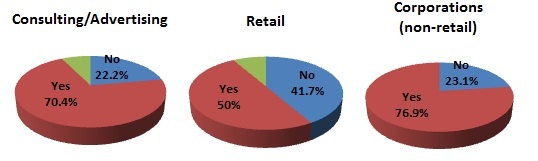
In evaluating the transfer policies of over 50 companies, I found that over a quarter will not transfer H-1Bs.  


Number of Companies Willing to Transfer H-1B Visas:


Detail by Industry:


The analytic talent war is in full swing, and as a hiring authority, if you are not willing to transfer an H-1B, you are missing out on a substantial pool of highly qualified candidates. In a sample of over 7,000 quantitative professionals in our network with varying levels of experience, I found the following: 


Visa Status of Entry-Mid Level Candidates:


As the data clearly show, when recruiting for entry to mid level positions, companies are doing themselves a great disservice by hesitating to transfer H-1B visas. Because more seasoned workers eventually progress to a green card or citizenship, this is less of an issue with senior level professionals.   


Visa Status of Mid-Senior Level Candidates:


Overall, transferring an H-1B visa is a fairly straightforward process that will open the door to a significant number of viable candidates. To be sure, visa situations do require extra legal attention but when handled properly, it is an investment that more companies ought to be making.

Stay tuned in the coming weeks for a follow up on frequently asked questions regarding visa transfers, as well as more helpful information on the predictive analytics talent pool. As I delve deeper into the demographics of my candidate database, I am finding more insight into what companies can expect when making hiring decisions and how this impacts the Big Data job market.  

Friday, December 7, 2012

Year in Review: Good News, Bad News


It’s that time of year again when we take a look back on 2012 and begin looking forward to 2013. When evaluating the past year, I see good news and bad news.   

Raises in salary have been marginal
The bad news is that salary increases in 2012 were minimal. While we are definitely in better shape than in the years directly following the recession in 2008, companies have been focusing on cutting costs as uncertainty about growth prospects continues and, as a result, raises have been incremental.

Base pay increased by about 2.8% in 2012, a marginal increase from 2.7% in 2011. This varies significantly by city and industry, with Denver; Dallas; Detroit; and San Diego seeing higher than average increases in the 3% range, and San Francisco; Chicago; and Minneapolis experiencing below average increases around 2.7%.

If candidates want to see a good bump in pay, they will need to change jobs. Mid-level to senior people can expect an 8-12% increase in salary with junior candidates sometimes seeing slightly higher increases.

No urgency to hire
Overall, there’s a lack of urgency to hire. Junior candidates are seeing a fair amount of activity this year, but the trend has certainly been steady as you go. Clients are hesitating seeking the ‘perfect match’ and delaying hires at the more senior end (those making over $150k base). This is especially evident in certain industries, such as consumer packaged goods.  CPG firms continue to focus on costs and are not hiring, in some cases laying off and replacing seasoned workers with younger and less expensive staffers. 

Bonuses are also a factor in hiring, especially in the late fourth and early first quarters. Senior level candidates are choosing to sit tight until they get their anticipated first quarter bonus and hiring companies are reluctant to cover a lost bonus with a sizable sign-on. Instead, they are waiting to hire, or in some cases moving on to other, less expensive, prospects.   

Now for some good news
The quantitative job market has been strong, even throughout the lackluster recovery. Consulting companies, for one, continue to be on the rise and are dominating analytics. Corporations are more and more turning to the flexibility of using consulting companies to address their quantitative issues and these firms are hot to hire if you are open to the heavy travel.  I have also seen more tech companies developing their in-house quant capabilities and hiring more aggressively than other industries.

Housing market improving
One major change in just the past few months is that the housing market is looking more favorable. This means that there is less hesitation on both the client and candidate’s end to relocate for the right situation. Corporate relocation packages are coming back, whereas the pattern up until recently has been using sign-on bonuses to cover moving expenses.

A note on bonuses
Bonuses may not be back to pre-recession levels, but things are getting better and pay outs have been consistent. One of the most interesting trends that I’ve seen developing is companies paying out partial bonuses in 2012 in order to accelerate income in anticipation of next year’s higher tax rates. I have seen this come up a few times in active candidates since the presidential election and am curious what impact this will have on hiring in the next few months.

2013 – Here we come!
Every year has its ups and downs but I continue to see improvement in the job market and the quantitative arena as a whole. I’m ready for 2013, which incidentally is the International Year of Statistics. Let’s see if it lives up to the title!  

It’s been a great year at Burtch Works and hopefully for all of you as well. Have a great holiday season and best wishes from everyone here to you and yours. See you next year!

Friday, November 30, 2012

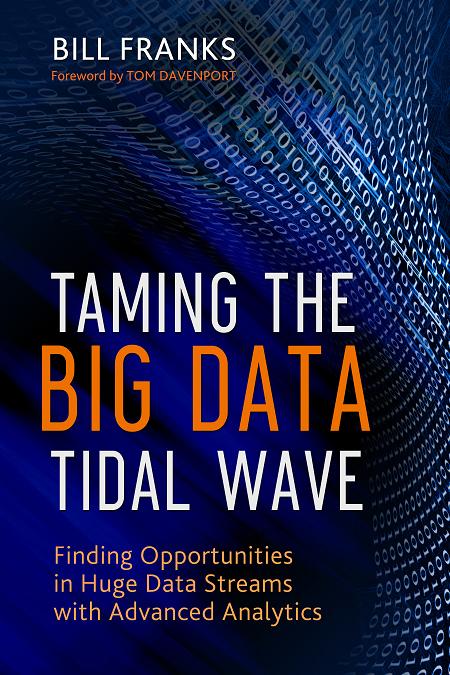
Book Review: Taming the Big Data Tidal Wave


Bill Franks offers an excellent guide to understanding and utilizing Big Data in his informative and fun book, Taming the Big Data Tidal Wave. It's a well written account of the "Big Data" craze that does a good job of emphasizing the longevity of this movement. With how often the phrase Big Data gets thrown around today, it's easy to write it off as merely a fad. Bill gives his audience a great understanding of why this is not true and why all organizations should be taking the appropriate steps to enhance their analytics.

In a sense, the book is a how-to for both organizations that need to initiate a Big Data movement and those that simply need to enhance their current system. I found this particularly interesting because although I am a member of the analytic community, I am something of an outside observer as a recruiter. Big Data is going to blow us all over, and Bill Franks is letting us know what we should expect.

From my perspective as a recruiter, I do wish that the author gave some short term solutions to the ever expanding shortage of advanced analytics professionals who can manipulate this data, but I suppose that's because there is no short term answer! This is a great read for both a technical and non-technical audience. I learned a lot and I highly recommend it.

Thursday, November 15, 2012

American Math Education: Worse Than We Think?


As a recruiter of quantitative talent I’m always interested to hear how math education in the United States compares to other countries. As a mother of three high school kids, I’m personally invested in the state of public school education and how our children can compete internationally. This is why I found Arthur Levine’s recent article in the Wall Street Journal particularly troubling.

Mr. Levine points out the obvious truth that most Americans are aware of: the United States is mediocre at best in math education. Every year recent grads are competing with the best in the world and they are unfortunately ill-prepared. If we don’t focus on fixing this problem now, it will only get worse. Math education has fallen to the wayside and apart from a new statistic coming out every few months to support what we already know, it doesn’t look like the government is making any effort to make a substantial change.

What Mr. Levine points out though is that there’s another form of competition within the US as students in urban and inner city schools compete with their counterparts in the suburbs. Shockingly, he specifically points to Evanston, IL and Scarsdale, NY as exceptions to general low performance in American schools. Mr. Levine writes that students in Evanston outperform students in Finland and Singapore, the top school systems in the world.

My children are currently enrolled in Evanston Township High School, and while I’d love to believe they are part of a competitive, high performing system, I was skeptical. Based on experience this did not ring true, and sure enough the facts prove otherwise. According to the Prairie State Achievement Exam, only 42% of student at ETHS met federal education standards in math. This is clearly substantially lower than the 75% proficiency rate in Shanghai and even 50% in Canada.

My children are fortunately able to partake in ETHS’s high level math program. As frustrating as the national statistics are, the students in this program are outstanding, motivated, and sure to succeed. I can’t speak highly enough of the fantastic teachers who devote so much to math education and inspire their students.

I wish there were more programs like this available to more students nationwide. I’m sorry to say that the overall picture, though is bleaker than Mr. Levine paints it. If even these so-called “affluent suburbs” are not up to par with the international community, something has to change.  

Tuesday, November 6, 2012

The New Golden Child of Statistics


Happy Election Day everyone! I went out and voted this morning and hope you all will too. The past few weeks for many of us have been a veritable bombardment of political ads and polls. It seems like every day there are several new polls out, sometimes with conflicting results. It has made me think about how presidential elections have evolved into an incredibly calculated guessing game and even more about the statisticians behind this evolution.

I am continually amazed by the changing face of statistics. I can easily look back 30 years ago when I started recruiting for this industry and remember the stigma that these professionals carried. Statisticians were back room number crunchers whose brilliance was rarely recognized. You would be a god in the statistical community if you had a textbook taught at a university, let alone had a New York Times Bestseller on the bookshelves.

Needless to say, the script is very different today. Moneyball has reached pop culture status, Facebook and Twitter are providing scientists with information about public safety, and Nate Silver is now a household name.

If you haven’t heard of Silver yet, you’re in the minority. Author of the widely popular New York Times blog FiveThirtyEight, Silver is showing the world that statistics is sexy. He rose to fame with his PECOTA system used to predict the performance of major league baseball players and over the years has turned to politics. (I’m sure you’ve all read about his much debated 2012 presidential picks!)

I for one could not be happier to have Silver in the spotlight. His new book The Signal and the Noise is on my holiday reading list and his refreshing insights are always a nice break from the same old commentary. Silver’s unique approach to statistics will be highlighted this week as part of the Karla Scherer Endowed Lecture Series for the University of Chicago. With the election winding down this week, he is sure to speak about a wide array of topics, including his first love: baseball.

Tickets are (not surprisingly) sold out, but I can only hope to see more of Silver and the new face of statistics in the coming months.