Friday, March 15, 2013

Salaries and Bonuses for Entry-Level Candidates: What is Normal?


Earlier this month I took a look at what kind of salary increases quantitative workers could expect at different points in their careers. While this is helpful information for seasoned workers and certainly interesting for entry-level candidates to keep in mind as they look at the market value of careers in Big Data, I wanted to take a closer look at salary and bonuses specifically for analytic professionals coming out of school.

Based on a sample of almost one hundred recent graduates, I found that the average base salary for entry-level candidates was $63k. Candidates with PhDs saw higher salaries averaging around $73k, and the average for those with a Bachelor’s degree was $52k. Most of our respondents held a Master’s degree and these candidates were making around $63k in their roles with no prior work experience. 


Most of the candidates in this sample (61%) were also eligible for an annual performance bonus, however those entering the work force right out of their Bachelor’s program should  not necessarily expect one, as less than a quarter of these candidates were bonus eligible.  These bonuses also varied quite a bit from 3-20%.

It is interesting to note that most entry-level candidates do not receive a sign-on bonus. This is sometimes common with more senior level workers, but as I expected, only 17% of all the candidates reported receiving a sign-on. For those who did receive one, the average was almost $5,000.

An education with a quantitative focus continues to give students strong job prospects as Big Data careers promise to stay in-demand. The level of degree attained is something to keep in mind for entry-level candidates who are unsure of what salary to expect in their first position. While further in one’s career experience may eventually trump educational background, having a solid foundation and at least a Master’s degree sets you on a path to success. 

Monday, March 4, 2013

Salary Changes for Quant Workers - What Can You Expect?

One of the most interesting parts of my job (or at least the part that my candidates find most interesting) is staying informed about the market value of quantitative workers. Everyone wants to know what kind of increase they can expect from a job change, and with my unique vantage point, I can give you a better idea of what’s ‘normal’ in terms of compensation increase when you make a change.

When evaluating salary change data over the past 18 months of nearly 200 candidates, I have seen both extremes and everything in between with base salary increases. As far as what predictive analytics professionals can expect, the average base salary increase is 14.1%. More junior candidates see slightly higher average increases of 14.3%, with senior candidates at the VP level seeing increases of 12.6%. 


We also took a look at salary increase from an educational perspective and found that candidates with a doctorate degree see an average increase of almost 16% in salary, while those with a Bachelor’s can expect something closer to the overall average of 14%.


Of course these data are ever changing, and depending on the current state of the economy, these increases will rise and fall respectively. Candidates expecting a 15 or 20% bump in base pay with each move they make, however, will be disappointed with the reality of more conservative increases, especially on the senior end. And while the average pay increase for candidates is 13.7%, most people actually see changes closer to 6-10%, as seen in this graph:


Although some candidates do receive pay increases of 20% and higher, it’s important to keep in mind that these are usually candidates with uncommon circumstances. Oftentimes these people are underpaid to begin with and making up for lost ground. However, if you are hoping to increase your salary by more than 15% in your next position, there are some ways to help make this happen. Being flexible with geographic locations certainly increases your negotiating position. You could potentially generate multiple offers and consequently reap a higher salary. In addition, more remote locations have a more difficult time attracting strong candidates and may pay more than a larger metro area. Candidates might also consider roles with heavy travel and longer hours to better weigh options with higher salary. Consulting companies are one of the leading industries hiring quantitative workers and can present competitive compensation packages. Moving into a potentially risky business too, while not as safe of a bet, can be rewarded accordingly.

Initial salary offers sometimes come with a bit of wiggle room, but the art of negotiation is delicate and if you choose to engage you should proceed with caution. Keep in mind that you’ll likely be working closely with the person with whom you’re negotiating, and you want to be mindful of your future professional relationships. Be tactful and appreciative, and if working through a recruiter, strongly consider having them take the reins. Recruiters are well versed in negotiation and can best represent you to your employer while getting the best offer possible.

Salary increases haven’t been as significant as one might expect with all the talk of Big Data in the media, but I am curious to see what these numbers will look like next year as the data craze continues and more companies look to expand their analytics practices. That being said, it’s important to remember that money isn’t everything and there is a myriad of other factors in your compensation package to consider when switching jobs including bonus, stock options, sign-ons and relocation assistance, health benefits, 401k, and much more. Most importantly, you need to ask yourself what a new job means for your long term career. This very well may have the biggest impact on your lifetime earning potential.

Stay tuned for more salary analysis in the coming weeks. In the meantime, I would love to hear your thoughts on salary increases and whether my findings have been in keeping with your experience.  

Friday, February 15, 2013

Visa Questions Answered


Last month I shared some information with you regarding the number of companies that are willing to transfer H-1B visas as well as how many predictive analytics professionals are on H-1Bs at various points in their careers.

The topic of H-1Bs has been in the news lately and based on some of the reactions I have read, there seem to be many misconceptions about the immigration process in employment. I decided to ask an experienced immigration attorney, Mr. David Rubman, to answer a few questions about the H-1B process. David has over 25 years of experience and has taught immigration law at Northwestern University School of Law. He is currently head of the firm Rubman & Harris in Chicago. Here are the highlights from our conversation.

The First Steps:

Linda:  What is OPT?

David:  OPT (Optional Practical Training) is a temporary work permit that is generally granted to a student on an F-1 visa who has completed his or her studies.

Linda:    Are there any restrictions on OPT visas or can candidates on OPTs work for any company?

David:   The student can work only in his or her field of study.

Linda:    How long is an OPT visa valid for?

David:   It is usually issued for 12 months, but can be extended for another 17 months for certain graduates in the sciences, math, and technology. 

Linda:    Once the OPT is ended, what options does the employee have?

David:   In most cases, the employer needs to apply for an H-1B visa for the employee.

H-1B Visas – The Basics:

Linda:  Can you briefly describe the H-1B visa?
David:  The H-1B visa category is available for foreign nationals working in professional-level positions.  H-1B visas are generally approved for three years, with a maximum period of six years that someone can stay in the US.

Linda: One of the misconceptions some people have about hiring H-1B candidates is that it gives preference to foreign candidates over Americans. Can you comment?

David: Rest assured the Department of Labor oversees hiring practices to make sure that the salary offered to H-1B candidates cannot be lower than the wage usually paid to other employees in the same positions. In other words, an employer cannot use H-1B employees to undercut wages of US citizens. However, there is no requirement that the employer must show there is a shortage of US workers.

Sponsoring an H-1B:

Linda:  One of the biggest concerns we hear is related to the “H-1B cap.”  What is the cap, and how does it impact our clients and candidates when sponsoring an H-1B candidate?

David:  There is a limited number of H-1B visas that can issued each year.  Currently that limit is 85,000.  When the government receives enough applications to reach the limit, they stop accepting H-1B visa applications.  This can be a big problem for someone who applies for an H-1B after the annual limit has been reached.

Linda:  There is a separate quota for people who have Master’s degree earned in the US.  Does that fix the problem?

David;  No, I’ve included the 20,000 in the 85,000 total.  In every year since the mid-2000’s, the quota has been reached for people who hold U.S. Master’s degrees as well as everyone else.

Linda:  And some employers are exempt from the cap and can get H-1B employees at any time of the year?

David:  Yes, universities and non-profit organizations affiliated with universities are “cap-exempt” and can get H-1Bs at any time of the year.

Linda:  So, assuming the employer is not cap exempt, how can an applicant ensure his or her application gets accepted under the annual quota?

David:  Apply as early as possible.  Applications are accepted starting on April 1 for the next fiscal year that starts on October 1. 

Linda:  How much does it cost for a company to sponsor a candidate for an H-1B?

David:   Immigration application fees are high.  For small companies under 25 employees, the fee is $1575.  For larger employers, the fee is $2325.  Attorney fees are generally in the $2000-$3000 range.  Under the H-1B program, the employer MUST pay all those fees – the employee is not allowed to pay for any of the process.

Transferring an H-1B:

Linda:  We have had some issues arise when people transfer from one H-1B employer to another.  How does that work?

David:  In most situations, transferring from one H-1B employer to another is simple.  Once the new employer files the application, the employee can start working for the new employer.  The employee does not have to wait for the approval to start work.  

Linda:  What about when the first employer is cap-exempt, but the new employer is subject to the cap?

David: That can be a tricky situation. If you are a candidate coming out of a non-profit or other cap-exempt company, your new employer needs to file a brand new H-1B application and be accepted into that year’s cap. Timing can be tricky, as job offers do not always come out in April when applications start. This can be complicated, so each case must be analyzed closely.

Coming up next:

I hope this clears up some of the confusion behind visa policies in employment. Of course, we have only scratched the surface and if you have any additional question, David is a great resource.  I’m grateful for his time in answering some of my questions, and in the next couple of weeks I’ll share the rest of our conversation regarding the Green Card process and the path to Permanent Residency. 

Friday, February 8, 2013

Predictive Analytics Gender Breakdown

A few weeks ago I examined the demographics of the predictive analytics market in regards to citizenship status. I found that as professionals progress in their careers, the number of workers on visas drops off significantly.

Visa status isn’t the only difference in junior and senior candidates. As I evaluate my internal database of over 7,000 predictive analytics candidates, I noticed that the number of women in quantitative professions decrease noticeably at around the 15 year mark.  


To give you a better idea of what the numbers look in candidates with less experience, here’s a breakdown of entry to mid-level candidates: 

The number of women in predictive analytics, and in the math and science fields in general, has always been much lower compared to men. Based on these data, we learn that life events such as starting a family may be a huge contributing factor in the drop off in women with more than 15 years of experience. 

I will be sure to follow up with more interesting statistics about statisticians in the coming weeks and months, so look out for additional insights into the analytics market.  

Wednesday, January 30, 2013

Statistics for the Layperson


It started in 2005 with Freakonomics. The big, scary field of study previously reserved for educated economists was offered to the layperson in the form of a witty and easy to read bestseller and the layperson ate it up. We got a second helping with SuperFreakonomics in 2009 and the trend was very much the same. Regular people with no background in Economics, and perhaps not even a prior interest in world affairs, read Steven Levitt’s book about the “hidden side of everything” and were hooked.

Three years later we see a continued interest in math and science focused on everyday applications. In November, I talked about Nate Silver’s emergence as the golden child of statistics and sure enough, his star has been rising. The Signal and the Noise has average people interested in statistics, a notion unimaginable just ten years ago. And now in 2013 I’m excited for the release of Naked Statistics by Charles Wheelan, author of Naked Economics. While Naked Economics wasn’t met with quite the same fervor and praise as Freakonomics, we are living in an almost entirely different time and Mr. Wheelan’s new book is sure to ride the wave of popularity that statisticians like Nate Silver have enjoyed.  

I’m still amazed at how many people to this day view statisticians as back room number crunchers doomed to a life of anonymity. Clearly this is all changing, and Mr. Wheelan’s book is just the latest example of statistics’ prevalence in our common popular culture

Monday, January 28, 2013

Visa Statistics for Predictive Analytics

Last year, as the Big Data craze was starting to make its way into the headlines of every paper in the country, my candidates were approaching me and asking about their options. What’s the hottest industry for Big Data jobs? What cities are hiring quantitative professionals? Today, the demand for these workers is higher than ever and the ball is in the company’s court to fill the need.    

As a recruiter for predictive analytics jobs, I am in the unique position to follow trends in candidate demographics and client hiring practices. Recently, many clients have asked for data on visa statistics for analytic professionals, so I examined how many companies are willing to transfer visas and then compared this to the number of candidates on H-1Bs. 

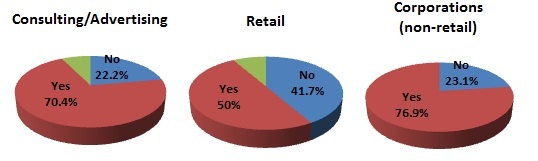
In evaluating the transfer policies of over 50 companies, I found that over a quarter will not transfer H-1Bs.  


Number of Companies Willing to Transfer H-1B Visas:


Detail by Industry:


The analytic talent war is in full swing, and as a hiring authority, if you are not willing to transfer an H-1B, you are missing out on a substantial pool of highly qualified candidates. In a sample of over 7,000 quantitative professionals in our network with varying levels of experience, I found the following: 


Visa Status of Entry-Mid Level Candidates:


As the data clearly show, when recruiting for entry to mid level positions, companies are doing themselves a great disservice by hesitating to transfer H-1B visas. Because more seasoned workers eventually progress to a green card or citizenship, this is less of an issue with senior level professionals.   


Visa Status of Mid-Senior Level Candidates:


Overall, transferring an H-1B visa is a fairly straightforward process that will open the door to a significant number of viable candidates. To be sure, visa situations do require extra legal attention but when handled properly, it is an investment that more companies ought to be making.

Stay tuned in the coming weeks for a follow up on frequently asked questions regarding visa transfers, as well as more helpful information on the predictive analytics talent pool. As I delve deeper into the demographics of my candidate database, I am finding more insight into what companies can expect when making hiring decisions and how this impacts the Big Data job market.  

Friday, December 7, 2012

Year in Review: Good News, Bad News


It’s that time of year again when we take a look back on 2012 and begin looking forward to 2013. When evaluating the past year, I see good news and bad news.   

Raises in salary have been marginal
The bad news is that salary increases in 2012 were minimal. While we are definitely in better shape than in the years directly following the recession in 2008, companies have been focusing on cutting costs as uncertainty about growth prospects continues and, as a result, raises have been incremental.

Base pay increased by about 2.8% in 2012, a marginal increase from 2.7% in 2011. This varies significantly by city and industry, with Denver; Dallas; Detroit; and San Diego seeing higher than average increases in the 3% range, and San Francisco; Chicago; and Minneapolis experiencing below average increases around 2.7%.

If candidates want to see a good bump in pay, they will need to change jobs. Mid-level to senior people can expect an 8-12% increase in salary with junior candidates sometimes seeing slightly higher increases.

No urgency to hire
Overall, there’s a lack of urgency to hire. Junior candidates are seeing a fair amount of activity this year, but the trend has certainly been steady as you go. Clients are hesitating seeking the ‘perfect match’ and delaying hires at the more senior end (those making over $150k base). This is especially evident in certain industries, such as consumer packaged goods.  CPG firms continue to focus on costs and are not hiring, in some cases laying off and replacing seasoned workers with younger and less expensive staffers. 

Bonuses are also a factor in hiring, especially in the late fourth and early first quarters. Senior level candidates are choosing to sit tight until they get their anticipated first quarter bonus and hiring companies are reluctant to cover a lost bonus with a sizable sign-on. Instead, they are waiting to hire, or in some cases moving on to other, less expensive, prospects.   

Now for some good news
The quantitative job market has been strong, even throughout the lackluster recovery. Consulting companies, for one, continue to be on the rise and are dominating analytics. Corporations are more and more turning to the flexibility of using consulting companies to address their quantitative issues and these firms are hot to hire if you are open to the heavy travel.  I have also seen more tech companies developing their in-house quant capabilities and hiring more aggressively than other industries.

Housing market improving
One major change in just the past few months is that the housing market is looking more favorable. This means that there is less hesitation on both the client and candidate’s end to relocate for the right situation. Corporate relocation packages are coming back, whereas the pattern up until recently has been using sign-on bonuses to cover moving expenses.

A note on bonuses
Bonuses may not be back to pre-recession levels, but things are getting better and pay outs have been consistent. One of the most interesting trends that I’ve seen developing is companies paying out partial bonuses in 2012 in order to accelerate income in anticipation of next year’s higher tax rates. I have seen this come up a few times in active candidates since the presidential election and am curious what impact this will have on hiring in the next few months.

2013 – Here we come!
Every year has its ups and downs but I continue to see improvement in the job market and the quantitative arena as a whole. I’m ready for 2013, which incidentally is the International Year of Statistics. Let’s see if it lives up to the title!  

It’s been a great year at Burtch Works and hopefully for all of you as well. Have a great holiday season and best wishes from everyone here to you and yours. See you next year!