Showing posts with label visas. Show all posts

Monday, July 22, 2013

Immigration Reform and Analytics

Immigration reform has been on the lips of almost every political commentator in the past few weeks. The topic is heavily debated and cumbersome in detail, but as members of the analytic community we must understand it as it affects our job market directly.  As we reported in The Burtch Works Study 58.8% of entry-level Big Data professionals are not U.S. citizens, which means that companies are looking abroad for professionals with the necessary skills to tackle their data sets and analytics challenges.

Companies want the best and brightest in the quantitative sciences, and the fact is that right now many of these workers come from outside the U.S. As pointed out by John Shinal in this article that I posted on twitter many companies are building offices overseas when the available visas run out since, “the 65,000 cap on H-1Bs for this year was reached on the very first day that the government began accepting visa applications”. The competition is quite clearly global, and this immigration reform could help boost our standing in the community by encouraging companies to keep their offices here in the U.S.

Rosario Marin, former US Treasurer under President George W. Bush points out in her recent op-ed piece in the Wall Street Journal, “The current skilled-labor shortage—particularly for workers in science, technology, engineering and math occupations—puts U.S. companies at a disadvantage. By 2020, an estimated 1.5 million jobs will go unfilled, according to McKinsey & Co. Until America can educate enough graduates in these fields to meet the demand, legal immigration is the only option to find the necessary talent.” Most of these 1.5 million jobs are in analytics and that number will only continue to grow with further advancements in harnessing Big Data. Even most of the graduate students who excel in quantitative programs at the Master’s and PhD levels in the US come from outside of America. When these students graduate, we need to ensure companies are able to sponsor their visas and keep them in the country lest they find employment opportunities in Europe or Asia.


My hope for any change in the current immigration system is that the United States can continue to provide the best technological and scientific advancements that benefit us every day. Relative to that, as the economy continues its recovery we will see a renewed urgency to hire and fill positions that support such advancements within analytics that didn’t exist ten years ago. This Gallup Poll shows Americans mostly in favor of some type of immigration reform, and though I would not claim that the current bill is the best option, it is certainly a starting point. 

Thursday, April 25, 2013

Visa Talk Continued: The Green Card Process


In February, I talked to immigration attorney David Rubman about the steps involved with obtaining and transferring an H-1B visa. The process can be long and while on an H-1, candidates find their options limited as many companies will not sponsor transfers. The end goal for these workers is obviously permanent residency, but just how does one apply for and receive a green card? I continued my talk with Mr. Rubman to find out more.

Green Cards

Linda:     You said in our last conversation that the H-1B cannot be issued for more than 6 years.  What happens after 6 years?

David:    That’s why people apply for a green card.  A green card, also known as Permanent Residence, gives the individual the right to live and work in the US permanently.  It is also the first step to applying for US citizenship.

Linda:     How long into an H-1B can you apply for a green card?

David:    There is no limit on when an employer can apply for a green card for a worker.  It just depends on the employer’s policy.  Most employers want to wait some time to decide if they like the employee enough to sponsor him or her for a green card.  But legally the employer can start the green card process at any time, even before the employee starts working.  It is completely separate from the H-1B process.

Linda: What is the company’s responsibility for sponsoring a green card? You said most employers wait to start this process, presumably because of the cost and time involved?

David: The green card process is more complicated than the H-1B and more expensive.  For one thing, it is a process that requires the employer to advertise for US workers for the position, and then show it can’t find a qualified US employee. 

Linda: As opposed to an H-1B where there is no requirement that the employer show there is a shortage of American workers?

David: Exactly. 

Linda: So how long does the process usually take?

David: It varies based on circumstance. For persons with Master’s degrees born in India or China, the process can take more than 4 years.  For those born in other countries, the process can be completed in about 1 year.  For those without Master’s degrees, it is a longer process. 

Linda: What is the financial cost for employers sponsoring a green card?

David: Costs can be up to $10,000 for a green card case.

I want to thank Mr. Rubman again for the taking the time to provide his expertise. I know that many unique situations arise with both clients and candidates within the visa process, so if you have any additional questions, do not hesitate to reach out to Rubman & Harris.  

Friday, February 15, 2013

Visa Questions Answered


Last month I shared some information with you regarding the number of companies that are willing to transfer H-1B visas as well as how many predictive analytics professionals are on H-1Bs at various points in their careers.

The topic of H-1Bs has been in the news lately and based on some of the reactions I have read, there seem to be many misconceptions about the immigration process in employment. I decided to ask an experienced immigration attorney, Mr. David Rubman, to answer a few questions about the H-1B process. David has over 25 years of experience and has taught immigration law at Northwestern University School of Law. He is currently head of the firm Rubman & Harris in Chicago. Here are the highlights from our conversation.

The First Steps:

Linda:  What is OPT?

David:  OPT (Optional Practical Training) is a temporary work permit that is generally granted to a student on an F-1 visa who has completed his or her studies.

Linda:    Are there any restrictions on OPT visas or can candidates on OPTs work for any company?

David:   The student can work only in his or her field of study.

Linda:    How long is an OPT visa valid for?

David:   It is usually issued for 12 months, but can be extended for another 17 months for certain graduates in the sciences, math, and technology. 

Linda:    Once the OPT is ended, what options does the employee have?

David:   In most cases, the employer needs to apply for an H-1B visa for the employee.

H-1B Visas – The Basics:

Linda:  Can you briefly describe the H-1B visa?
David:  The H-1B visa category is available for foreign nationals working in professional-level positions.  H-1B visas are generally approved for three years, with a maximum period of six years that someone can stay in the US.

Linda: One of the misconceptions some people have about hiring H-1B candidates is that it gives preference to foreign candidates over Americans. Can you comment?

David: Rest assured the Department of Labor oversees hiring practices to make sure that the salary offered to H-1B candidates cannot be lower than the wage usually paid to other employees in the same positions. In other words, an employer cannot use H-1B employees to undercut wages of US citizens. However, there is no requirement that the employer must show there is a shortage of US workers.

Sponsoring an H-1B:

Linda:  One of the biggest concerns we hear is related to the “H-1B cap.”  What is the cap, and how does it impact our clients and candidates when sponsoring an H-1B candidate?

David:  There is a limited number of H-1B visas that can issued each year.  Currently that limit is 85,000.  When the government receives enough applications to reach the limit, they stop accepting H-1B visa applications.  This can be a big problem for someone who applies for an H-1B after the annual limit has been reached.

Linda:  There is a separate quota for people who have Master’s degree earned in the US.  Does that fix the problem?

David;  No, I’ve included the 20,000 in the 85,000 total.  In every year since the mid-2000’s, the quota has been reached for people who hold U.S. Master’s degrees as well as everyone else.

Linda:  And some employers are exempt from the cap and can get H-1B employees at any time of the year?

David:  Yes, universities and non-profit organizations affiliated with universities are “cap-exempt” and can get H-1Bs at any time of the year.

Linda:  So, assuming the employer is not cap exempt, how can an applicant ensure his or her application gets accepted under the annual quota?

David:  Apply as early as possible.  Applications are accepted starting on April 1 for the next fiscal year that starts on October 1. 

Linda:  How much does it cost for a company to sponsor a candidate for an H-1B?

David:   Immigration application fees are high.  For small companies under 25 employees, the fee is $1575.  For larger employers, the fee is $2325.  Attorney fees are generally in the $2000-$3000 range.  Under the H-1B program, the employer MUST pay all those fees – the employee is not allowed to pay for any of the process.

Transferring an H-1B:

Linda:  We have had some issues arise when people transfer from one H-1B employer to another.  How does that work?

David:  In most situations, transferring from one H-1B employer to another is simple.  Once the new employer files the application, the employee can start working for the new employer.  The employee does not have to wait for the approval to start work.  

Linda:  What about when the first employer is cap-exempt, but the new employer is subject to the cap?

David: That can be a tricky situation. If you are a candidate coming out of a non-profit or other cap-exempt company, your new employer needs to file a brand new H-1B application and be accepted into that year’s cap. Timing can be tricky, as job offers do not always come out in April when applications start. This can be complicated, so each case must be analyzed closely.

Coming up next:

I hope this clears up some of the confusion behind visa policies in employment. Of course, we have only scratched the surface and if you have any additional question, David is a great resource.  I’m grateful for his time in answering some of my questions, and in the next couple of weeks I’ll share the rest of our conversation regarding the Green Card process and the path to Permanent Residency. 

Monday, January 28, 2013

Visa Statistics for Predictive Analytics

Last year, as the Big Data craze was starting to make its way into the headlines of every paper in the country, my candidates were approaching me and asking about their options. What’s the hottest industry for Big Data jobs? What cities are hiring quantitative professionals? Today, the demand for these workers is higher than ever and the ball is in the company’s court to fill the need.    

As a recruiter for predictive analytics jobs, I am in the unique position to follow trends in candidate demographics and client hiring practices. Recently, many clients have asked for data on visa statistics for analytic professionals, so I examined how many companies are willing to transfer visas and then compared this to the number of candidates on H-1Bs. 

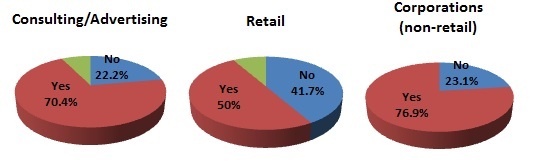
In evaluating the transfer policies of over 50 companies, I found that over a quarter will not transfer H-1Bs.  


Number of Companies Willing to Transfer H-1B Visas:


Detail by Industry:


The analytic talent war is in full swing, and as a hiring authority, if you are not willing to transfer an H-1B, you are missing out on a substantial pool of highly qualified candidates. In a sample of over 7,000 quantitative professionals in our network with varying levels of experience, I found the following: 


Visa Status of Entry-Mid Level Candidates:


As the data clearly show, when recruiting for entry to mid level positions, companies are doing themselves a great disservice by hesitating to transfer H-1B visas. Because more seasoned workers eventually progress to a green card or citizenship, this is less of an issue with senior level professionals.   


Visa Status of Mid-Senior Level Candidates:


Overall, transferring an H-1B visa is a fairly straightforward process that will open the door to a significant number of viable candidates. To be sure, visa situations do require extra legal attention but when handled properly, it is an investment that more companies ought to be making.

Stay tuned in the coming weeks for a follow up on frequently asked questions regarding visa transfers, as well as more helpful information on the predictive analytics talent pool. As I delve deeper into the demographics of my candidate database, I am finding more insight into what companies can expect when making hiring decisions and how this impacts the Big Data job market.